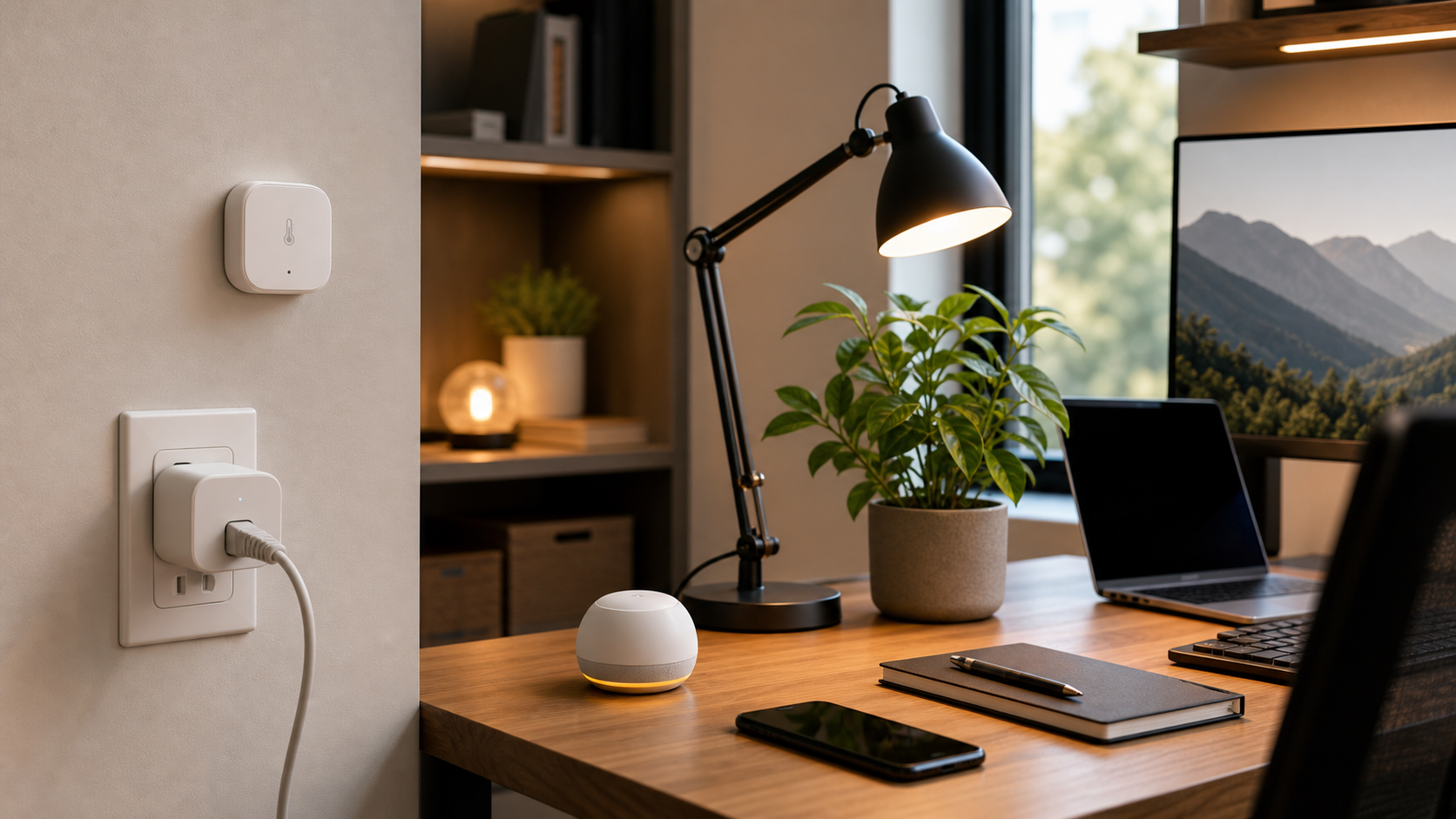
Smart home office devices are most useful when they automate small, repeated tasks without adding complicated maintenance.
MediaSoar writes for readers who want useful technology decisions without pressure, exaggerated promises, or confusing jargon. This guide focuses on practical signals you can verify before buying, subscribing, or changing your workflow.
Start with simple automations
A smart plug can turn task lighting on before work, shut down a charging station after hours, or control a fan. These small routines are easier to trust than elaborate scenes.
Sensors can help with temperature, motion, or air quality awareness, but the data should lead to a clear action. Measuring everything is not the same as improving the workspace.
Check platform support
Before buying, confirm support for the phone, speaker, hub, or automation platform you already use. Compatibility logos can be confusing, so read the current documentation.
Local control and privacy settings may matter if devices are used in a workspace. Review account requirements, data sharing, and firmware update history.
Avoid unnecessary complexity
A home office should stay ready for work even if an automation fails. Keep manual switches accessible and avoid setups that require a phone just to turn on a lamp.
The best smart devices disappear into the routine instead of demanding constant attention.
A quick decision checklist
- Automate one repeated task first.
- Confirm platform compatibility.
- Keep manual controls available.
- Review privacy and account requirements.
Bottom line: for smart living decisions, the strongest choice is usually the one that fits your daily constraints, works with the tools you already use, and remains easy to maintain after the first week.