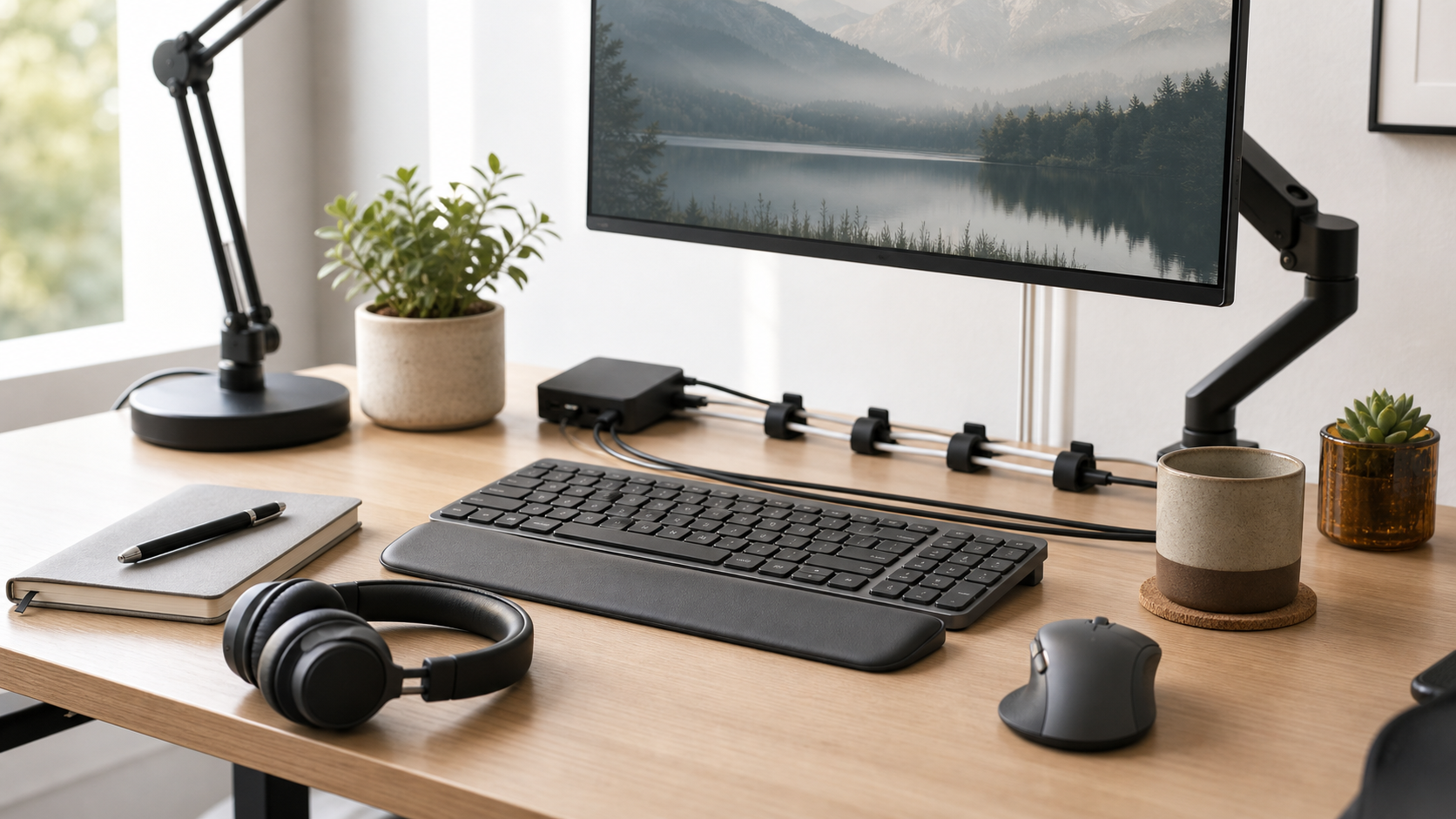
A standing desk can be useful, but the right decision depends on space, stability, adjustment range, and daily habits.
MediaSoar writes for readers who want useful technology decisions without pressure, exaggerated promises, or confusing jargon. This guide focuses on practical signals you can verify before buying, subscribing, or changing your workflow.
Check the room first
Measure desk width, depth, cable reach, outlet position, chair storage, and monitor clearance. Standing desks need room to move safely.
If the desk will hold multiple monitors or heavy equipment, stability becomes a core feature. Wobble can make typing, drawing, or camera use frustrating.
Adjustment range matters
The desk should support comfortable seated and standing positions. Some frames do not go low or high enough for every user.
Memory presets are useful when the desk is shared or when you switch positions frequently. Manual cranks can work well when adjustment is occasional.
Build habits slowly
A standing desk is not a requirement and should not be treated as a medical solution. Many people benefit from changing positions, taking breaks, and arranging the desk to reduce friction.
If discomfort or injury is involved, consult a qualified professional instead of relying on desk equipment alone.
A quick decision checklist
- Measure space and cable reach.
- Check weight capacity and wobble reports.
- Confirm height range.
- Change positions gradually.
Bottom line: for home office decisions, the strongest choice is usually the one that fits your daily constraints, works with the tools you already use, and remains easy to maintain after the first week.